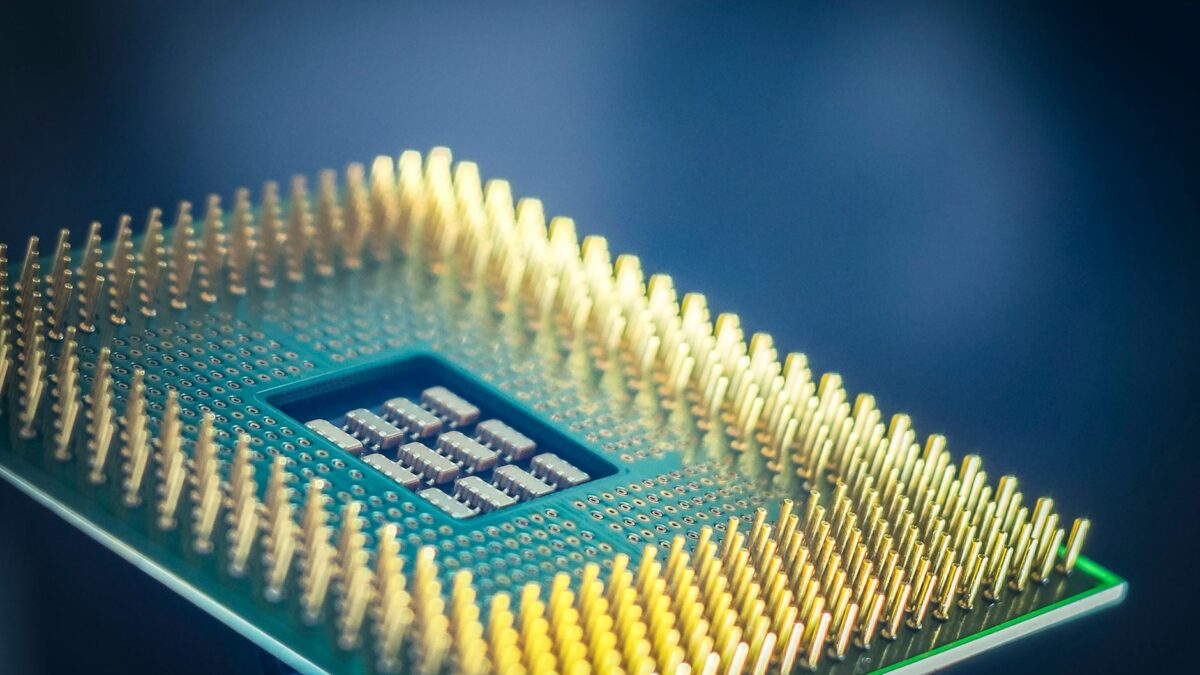
Google’s Ambitious Move into AI Chip Market
In a move that promises to shake up the artificial intelligence landscape, Google has announced its plans to release a new line of AI chips designed specifically for inference tasks. This strategic development is seen as a direct challenge to Nvidia, a leader in the AI hardware sector. As tech giants continue to invest heavily in AI technologies, Google’s entry into the AI chip market could redefine competitive dynamics and open new avenues for innovation.
The Importance of Inference in AI
Inference is a critical component of AI applications, where models are used to make predictions based on new data. Unlike training, which requires vast computational resources and time, inference must be performed quickly and efficiently to ensure that applications can respond in real-time. Google’s new chips aim to optimize this process, potentially offering significant advantages over existing solutions.
Understanding the AI Chip Market
The global AI chip market has seen exponential growth in recent years, driven by the demand for faster and more efficient processing capabilities. Nvidia has long been a dominant player, particularly with its GPUs which excel in parallel processing tasks required for training large AI models. However, as the focus shifts towards inference, the landscape is ripe for disruption. Google’s deep expertise in AI and machine learning gives it a unique advantage as it seeks to carve out a substantial share of this lucrative market.
Technological Innovations Behind Google’s AI Chips
While specifics about the new chips remain under wraps, industry insiders suggest that Google is leveraging its cutting-edge research in tensor processing and custom silicon design. By optimizing for inference, Google aims to deliver chips that not only outperform Nvidia in terms of speed and efficiency but also present a more cost-effective solution for enterprises looking to implement AI solutions.
Broader Implications for the AI Industry
Google’s entry into the AI chip market is significant for several reasons. Firstly, it signals a shift towards more specialized hardware that can handle the unique demands of AI processing. As companies increasingly rely on AI for various applications—from natural language processing to computer vision—having access to optimized hardware becomes paramount.
Competition Breeds Innovation
With Google stepping into the arena, competition in the AI chip market will likely intensify. This could lead to accelerated innovation, with companies striving to outdo one another in terms of performance, cost, and energy efficiency. As a result, consumers and businesses may benefit from a wider range of options and better pricing as companies vie for market share.
Impact on Nvidia and Other Players
Nvidia, which has enjoyed a relatively unchallenged position in the AI chip market, must now strategize to maintain its lead. The company has already begun diversifying its offerings and investing in software solutions that complement its hardware. However, Google’s entrance could motivate Nvidia to innovate even faster, potentially leading to new developments that could further enhance the capabilities of AI applications across industries.
Market Reactions and Future Outlook
The announcement of Google’s new AI chips has already sent ripples through the tech market, with investors keenly observing the implications for Nvidia and other competitors. As Google’s technology matures, we can expect to see shifts in stock prices and market confidence, particularly among companies heavily invested in AI solutions.
Additional Developments in the Tech Space
Alongside Google’s announcement, other significant developments are unfolding in the tech industry. Blue Origin successfully launched and landed its reusable booster for the New Glenn rocket, although it encountered challenges in placing its payload satellite into the correct orbit. This setback affected shares of AST SpaceMobile, highlighting the volatile nature of the aerospace sector, which, like the AI industry, is marked by rapid advancements and inherent risks.
Cerebras Ventures into Public Market
In another noteworthy event, Cerebras Systems has announced plans for an IPO just months after retracting a previous attempt. As the demand for AI chips continues to rise, companies like Cerebras, which specialize in AI hardware, are positioned to attract significant investor interest, further fueling the growth of the AI chip market.
What This Means
Google’s foray into AI chip production is not just a strategic business move; it represents a pivotal moment for the entire AI industry. As competition heats up, companies will be incentivized to innovate, leading to better, faster, and more efficient AI solutions. This could have far-reaching implications for businesses across all sectors, as AI technology continues to integrate into everyday operations. For consumers, the advancements in AI hardware may lead to improved products and services, ultimately enhancing user experiences.
As we look ahead, keeping an eye on the developments from Google, Nvidia, and other players in the AI chip market will be crucial. The race for supremacy in AI hardware is just beginning, and its outcome will shape the future of technology for years to come.